Fundraising in the AI era: What Founders should focus on
Fundraising in the AI era: What Founders should focus on

This week, at SaaStr AI London, I had the chance to speak about something every founder keeps asking me about: how to navigate fundraising in an AI-driven world that’s full of noise, hype, and inflated expectations.
The truth is: we’re in one of the most exciting moments for product builders in years - but also one of the most confusing. AI has changed what software does and how products are built. But it has also changed how VCs filter opportunities and deploy capital, which has distorted funding benchmarks.
In VC land, there are now two worlds for B2B software: the AI-powered and the AI-native. Most of VCs’ money and attention are focused on the latter. Consequently, too many founders are rushing to bolt some AI features onto their product, change their narrative, and try to raise too big, too early - building for what’s fundable rather than what customers actually need.
I shared two pieces of advice for founders:
Firstly, whether you’re AI-native or AI-powered, customers don’t know and they don’t care. They want one thing - massive productivity or impact. They care if your product replaces humans, supercharges humans, or changes how their business runs.
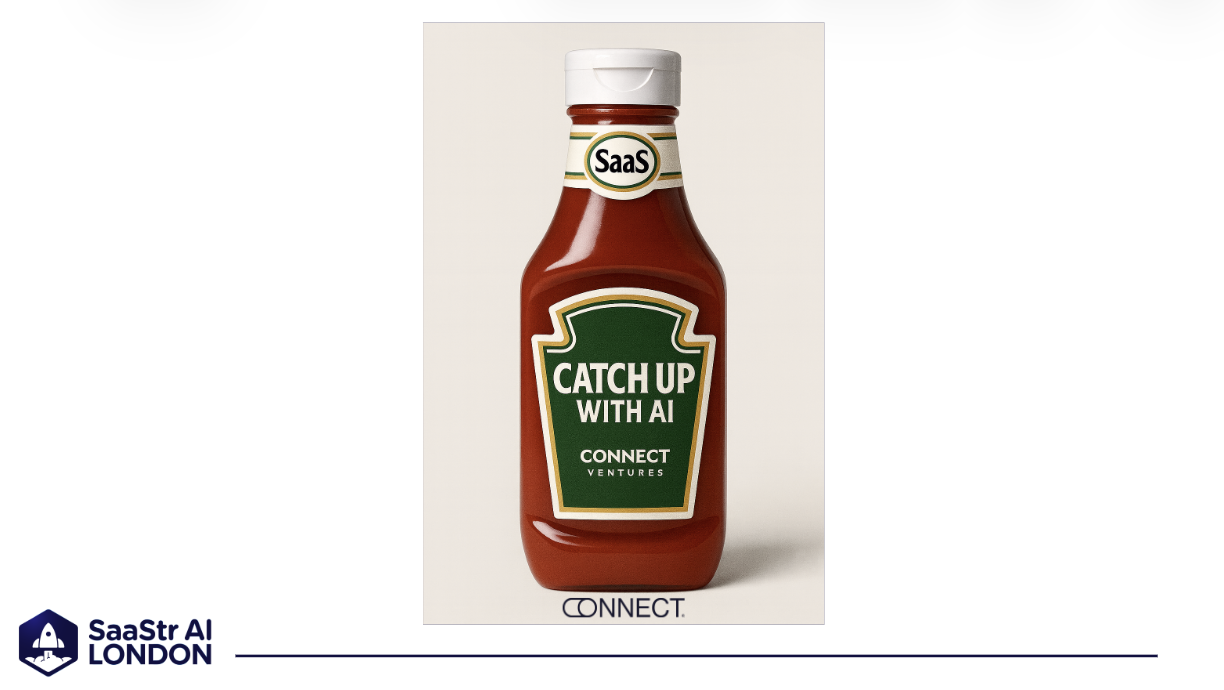
So your product needs to catch up with AI in a meaningful way - not by adding a feature, but by rethinking the value proposition from the ground up. Build AI into the core of the product so it transforms the UX and delivers 10x more value.
Aikido Security - one of our portfolio companies that we had the privilege to back at Seed - was on stage just before Pietro and explained how they leveraged AI to make Aikido not just marginally better, but significantly more powerful and automated.
Secondly, there’s still time. Enterprises, SMBs, and consumers all need 10x productivity. We’re in a rare moment where every buyer is in the market simultaneously. Hundreds of billions will be spent over the next year by customers looking for the kind of transformational automation that SaaS promised but never delivered.
In summary: focus on building product and customer value - not fundraising narratives.